Groups and historical interpretation
Reenactment groups may focus on a particular period, place, social setting or military unit. Others create broad medieval displays for public audiences. A group’s clothing, camp layout and objects are interpretations based on surviving evidence, images, texts, archaeology or comparison.
Costume is a research question
Clothing communicates status, climate, work and identity, but one garment cannot represent all medieval people. Fabrics, cuts, colours and accessories vary across time and place. Ask what period the outfit represents and whether it is reconstructed from a specific source or assembled for practical event use.
Camps and daily life
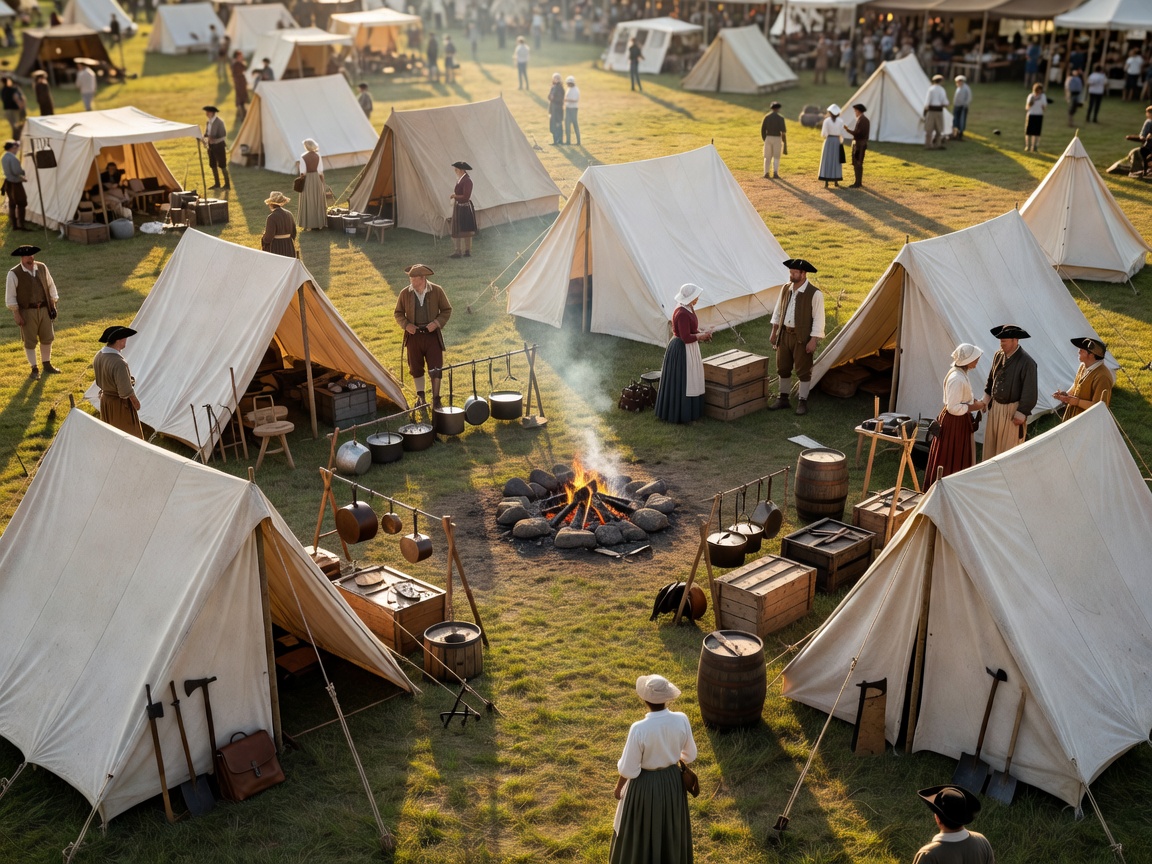
Camp displays can show cooking, storage, sleeping arrangements, tools and social space. They are useful for understanding scale and routine. Still, event camps may include modern hidden equipment, fire controls and safety adaptations. The visible arrangement is a public interpretation, not a complete archaeological reconstruction.
Demonstrations and education
Craft demonstrations connect people with process. Talks and object handling can add context. Strong interpretation identifies what is known, what is inferred and what is uncertain. Visitors should be able to ask questions without being treated as if the display were a theatrical secret.
Combat displays
Public combat displays are choreographed or controlled performances designed for safety and audience understanding. They should be watched from marked areas and never copied. A display may communicate movement, equipment or social themes, but it is not direct evidence of how every historical encounter happened.
Four useful labels
- Documented history: supported by identifiable primary or scholarly evidence.
- Reconstruction: a reasoned attempt to reproduce an object or practice.
- Interpretation: an explanation that combines evidence with informed judgement.
- Theatrical presentation: a performance shaped mainly for narrative or atmosphere.
Advantages and limitations
Reenactment makes scale, texture and routine easier to imagine. It can also compress social differences, favour attractive objects or blend centuries for practical reasons. The best visitor habit is simple: enjoy the display while asking what claim it actually makes.
Good for
Reenactment suits visitors who want conversation, practical material culture and an introduction to historical questions. It is less suitable when a visitor needs a fully documented account of one precise place and year.
What to know
Fantasy elements, modern jokes and staged drama may appear beside serious research. They are not medieval evidence. Current access rules and photography expectations belong to the organiser, not to historical assumption.
Related guides
Explore craft work · Compare event types · Plan respectfully