Pottery and clay
Pottery demonstrations may show forming, surface treatment, drying and firing. Visitors can ask what evidence supports the shape, finish or firing method. A contemporary kiln, glaze or safety process may be necessary, and that does not make the demonstration useless; it simply needs honest description.
Spinning, weaving and dyeing
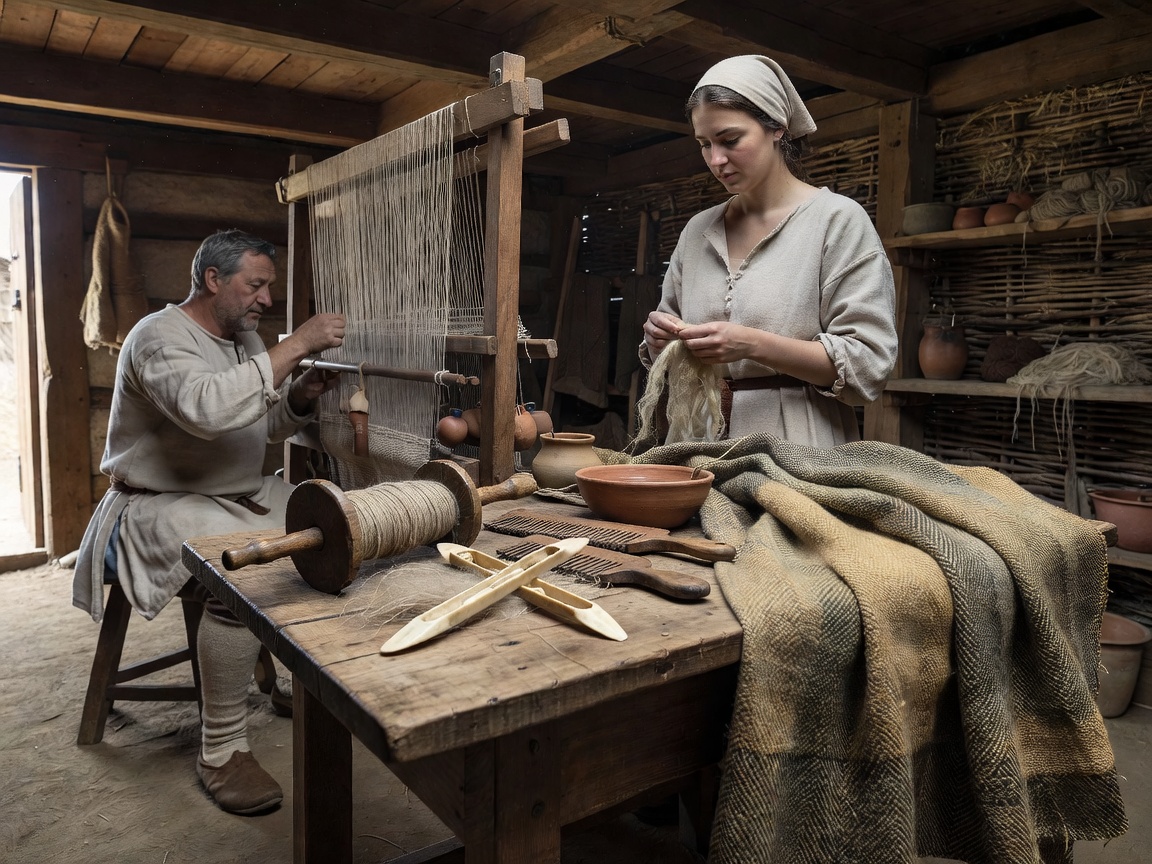
Fibre preparation, spinning and weaving reveal labour that finished cloth conceals. Demonstrators may work with wool, linen or other fibres associated with regional practice. Dyeing displays can explain plant materials and colour variation, but colour claims should be treated carefully because recipes and surviving evidence differ by place and period.
Leather, wood and basketry
Leatherworkers may cut, stitch, tool or shape hides. Woodworkers can demonstrate carving, turning or joining. Basketry connects local plants with storage and transport. These activities are often visually accessible, but modern hand tools, adhesives or protective equipment may be present. Ask what has been adapted for current use.
Metalworking
Blacksmithing and other metal demonstrations show heating, shaping and finishing at a general level. They require controlled working areas and should be observed from the designated boundary. A market display is not a full account of medieval metallurgy. It may present one reconstructed task, a modern craft workflow or a staged demonstration.
Food preparation
Food demonstrations can cover grinding, baking, preserving, brewing or serving. Modern hygiene rules are essential. A period-inspired recipe may use contemporary substitutes or equipment. Look for ingredient lists, allergen notices and a clear distinction between historical evidence and interpretation.
Decorative arts
Carving, tablet weaving, illumination, beadwork and painted decoration can connect objects with status and use. Decorative displays are strongest when they identify surviving examples, visual references or uncertainty rather than claiming that one pattern represents an entire region.
Questions worth asking
- Which part of the process is documented?
- What has been adapted for safety or modern equipment?
- Is the finished object historically sourced, reconstructed or inspired?
- Does the maker explain regional and chronological limits?
- Can visitors observe without entering a hazardous work area?
Good for
Craft-focused events suit visitors who learn through material evidence, families who need practical demonstrations and photographers who want detail without relying on costume.
What to know
Not every maker is presenting academic research, and not every reconstruction is inaccurate. Treat the explanation, source notes and stated limits as part of the craft display.
Related guides
Choose an event format · Understand interpretation · Compare regional materials